
Views: 220 Author: SJAVL Publish Time: 2026-11-19 Origin: Site


Content Menu
● Integrated Sound, Lighting and Stage Machinery vs Separate Engineering Contracts: What Changes?
● Why Venue Systems Must Be Engineered Together
>> Acoustics and Audio Share the Same Performance Problem
>> Lighting, Rigging, and Stage Machinery Share Physical Space
>> Intelligent Control Must Respect Safety Boundaries
● Where Integrated Venue Engineering Creates Practical Value
>> Earlier Decisions Reduce Avoidable Interface Changes
>> One Programme Connects Installation to Commissioning
>> Unified Handover Makes Operation More Manageable
● When Separate Engineering Contracts Are the Better Fit
● How to Compare EPC and Separate-Contract Costs Fairly
● A Six-Step Procurement Checklist for Venue Owners
>> 1. Write an Operational Brief
>> 2. Establish Measurable Acceptance Criteria
>> 3. Create an Interface Responsibility Matrix
>> 4. Review Coordinated Drawings Before Purchasing
>> 5. Require a Project-Specific Verification Plan
>> 6. Link Handover to Evidence
● Commissioning: Prove the Venue Works as a System
● Cross-Border EPC: Clarify Responsibilities Before Shipping
>> Is integrated sound, lighting, and stage machinery always cheaper?
>> Can separate contractors deliver a fully integrated venue?
>> Does turnkey EPC include all permits and building works?
>> Can one touchscreen control every venue system?
>> What should owners request before choosing SJAVL or another contractor?
>> What makes an integrated contract successful?
● Plan the Complete Venue, Not Just the Equipment Purchase
Guangzhou Saijia Acoustic & Lighting Engineering Co., Ltd. (SJAVL) approaches venue engineering with one priority: making the completed space work as a coordinated whole. For owners comparing integrated sound, lighting and stage machinery vs separate engineering contracts, the central question is not simply how many suppliers to appoint. It is who takes responsibility for the interfaces between them.
Our company background spans 26 years of work across acoustics, professional audio, lighting, stage machinery, rigging, LED displays, intelligent control, AV integration, and XR virtual-extension technology. Our turnkey EPC scope connects design, procurement, construction, installation, commissioning, testing, and long-term support.
From our perspective, integrated delivery is particularly valuable when these disciplines interact closely. Separate contracts can also succeed—but only when coordination, technical authority, and acceptance responsibilities are clearly funded and assigned.
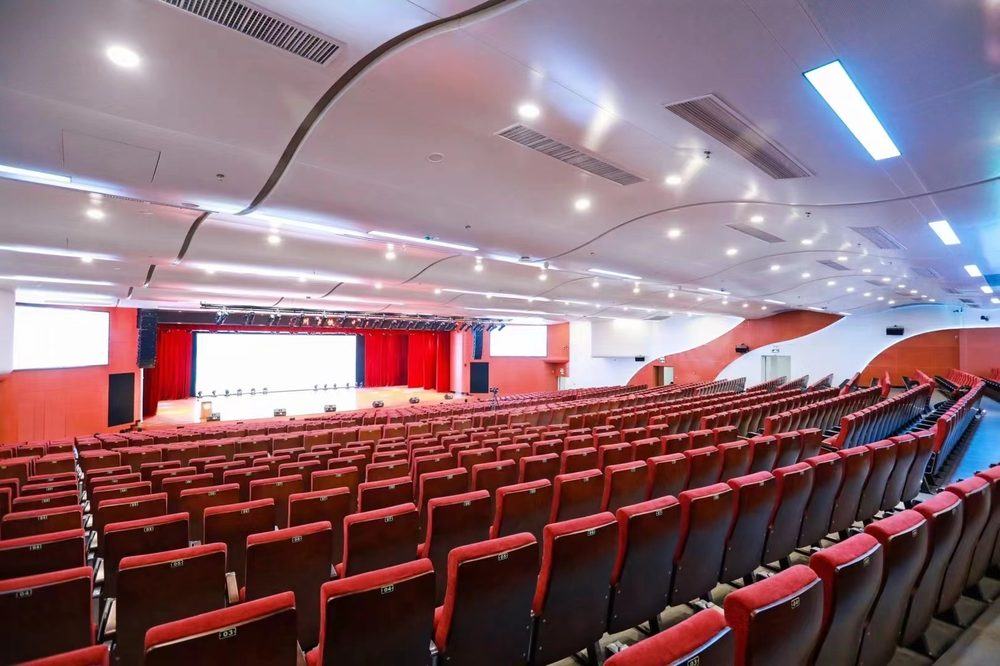
An integrated contract places multiple technical disciplines under one lead contractor. Under an EPC arrangement—engineering, procurement, and construction—that contractor assumes the responsibilities expressly defined in the contract.
Separate engineering contracts divide delivery among specialists. The owner, consultant, construction manager, or appointed systems integrator must then coordinate their work.
Importantly, EPC does not automatically mean every building service, permit, structural calculation, or approval is included. Scope boundaries still require careful definition.
| Decision area | Integrated delivery | Separate contracts |
|---|---|---|
| Design coordination | Led by one contracted team | Managed across multiple appointments |
| Procurement | Coordinated equipment packages | Direct specialist purchasing |
| Interface ownership | Can sit with the lead contractor | Must be assigned between parties |
| Change management | One coordinated review route | Multiple commercial and technical reviews |
| Acceptance | Can include unified system testing | Requires an overarching acceptance plan |
| Owner involvement | Potentially fewer interfaces to manage | More direct specialist oversight |
Neither model guarantees quality. Contract clarity and delivery competence matter more than the label.
A theater, auditorium, or multipurpose arena is not a collection of independent equipment packages. Physical space, structural capacity, electrical infrastructure, acoustics, and control systems connect the disciplines.
Loudspeaker selection cannot compensate for every room-acoustic weakness.
Room geometry, background noise, reverberation, loudspeaker position, and audience coverage need coordinated assessment. A system that sounds acceptable in an empty room may behave differently under actual operating conditions.
Our preferred starting point is the venue's intended use: speech, amplified music, drama, recording, broadcast, or a combination. Equipment decisions should follow those requirements.
Lighting fixtures, suspended loudspeakers, curtains, screens, and moving scenery may compete for the same overhead volume.
Their coordination requires more than checking installation drawings individually. Designers must consider equipment dimensions, loads, movement envelopes, access, cable routing, and maintenance positions together.
An integrated drawing review helps reveal conflicts before installation. With separate contracts, the same review remains necessary; someone must own it.
A unified user interface can simplify everyday operation. It should not be confused with a safety-rated machinery control system.
Stage machinery needs appropriately engineered operating permissions, protective measures, emergency-stop arrangements, and validation.
Our design principle is integrated operation, not indiscriminate control consolidation. Convenience must never bypass the safeguards required for moving equipment.
*Suggested visual: Insert a coordinated stage-section drawing showing loudspeakers, lighting bars, machinery travel, LED screens, and maintenance access.*
The strongest argument for integration is not an unsupported promise of lower prices. It is a clearer process for managing interdependent decisions.
Consider an illustrative auditorium project—not a reported SJAVL case study.
The audio designer proposes suspended loudspeaker arrays. The lighting contractor reserves nearby positions for fixtures. The machinery supplier later identifies an overlapping curtain-travel zone.
All three packages may be technically reasonable in isolation. Together, they conflict.
A coordinated design review can address the problem before procurement. If discovered after fabrication or installation, the team may need revised supports, relocated equipment, additional cabling, or renewed approvals.
Integration does not eliminate changes. It creates an opportunity to identify them earlier.
An equipment delivery date is not a venue-readiness date.
Audio tuning may depend on completed acoustic finishes. Lighting focusing requires installed fixtures and access. Machinery testing needs suitable site conditions and qualified personnel.
A coordinated programme identifies these dependencies and protects time for combined testing, operator training, and defect correction.
The operator should receive a functioning venue, not unrelated manuals.
A coordinated handover package should connect:
- As-built drawings and equipment schedules.
- Signal-flow diagrams and cable identification.
- Approved settings, configuration backups, and recovery procedures.
- Inspection records and maintenance instructions.
- Warranty responsibilities and support contacts.
- Operator training and competency requirements.
The value continues after opening, particularly when troubleshooting crosses disciplinary boundaries.
Separate contracts remain a legitimate choice.
They can suit a limited replacement project, a venue with established technical standards, or an owner with an experienced in-house engineering team.
For example, replacing an audio console without materially changing loudspeakers, infrastructure, or machinery may not justify a wider EPC package.
Separate procurement may also help owners retain direct relationships with preferred specialists.
However, owners should budget explicitly for integration. Dividing the purchasing contracts does not remove the engineering connections between systems.
Before choosing separate packages, ask:
1. Who approves the coordinated design?
2. Who resolves conflicting equipment requirements?
3. Who controls software and network interfaces?
4. Who leads combined commissioning?
5. Who investigates faults involving multiple contractors?
If the answers are unclear, the owner may be retaining more delivery risk than expected.
Comparing equipment quotations alone can produce a misleading result.
A more useful comparison considers the complete delivery and operating scope:
Evaluated cost = contracted works + owner-side coordination + excluded works + identified risk allowances + lifecycle obligations.
This is a procurement framework, not a prediction of savings.
For each proposal, check whether the price includes design development, structural interfaces, access equipment, testing, training, documentation, travel, and post-handover support.
Then compare assumptions. One bidder may include acoustic verification and integrated testing; another may include installation only.
For lifecycle planning, examine replacement access, spare parts, software licensing, configuration ownership, and service availability.
A lower initial quotation can still be the right choice. It simply needs to be compared against an equivalent scope and an understood risk allocation.
Describe actual activities, audience arrangements, staffing, production workflows, and future expansion.
"Suitable for performances" is too broad to guide engineering.
Agree what will be tested, how it will be measured, and what constitutes acceptance.
Depending on scope, criteria may address audio coverage, speech intelligibility, background noise, lighting performance, display visibility, control behaviour, and machinery operation.
Avoid copying universal targets without considering the room and its purpose.
List each shared interface and name its design, supply, installation, approval, and testing owners.
Include structural supports, electrical power, grounding, data networks, HVAC noise, fire-system interfaces, and access provisions.
A matrix becomes useful when every line has a named responsible party.
Check mounting locations, cable routes, service clearances, structural assumptions, equipment weights, and movement zones.
Document approvals before long-lead procurement.
AVIXA's performance-verification framework provides a useful basis for deciding what needs verification, when it should occur, and how results should be reported.
The contract must still establish the project's actual performance criteria.
Require completed test records, resolved critical defects, approved documentation, training, and agreed support arrangements.
Commercial milestones should reflect the contract and local requirements—not substitute for technical acceptance.
A demonstration that each device switches on is not sufficient.
Performance verification should establish whether the installed systems meet the agreed requirements under defined conditions.
An integrated acceptance session might include:
- Recalling an operating mode for a presentation.
- Checking audio routing and playback.
- Confirming lighting presets and display inputs.
- Demonstrating permitted machinery functions through qualified personnel.
- Testing defined fault responses and recovery procedures.
- Verifying that operators can follow documented workflows.
Machinery safety requires separate attention. ESTA's standards address areas including powered hoist systems and stage machinery controls, but their scopes differ.
The applicable standards, editions, local laws, structural requirements, and inspection obligations must be confirmed for each project. An international reference is not automatic evidence of local compliance.
*Suggested video: Include a supervised commissioning walkthrough showing normal operation, operator training, and handover documentation—not unsafe machinery demonstrations.*
International venue projects introduce additional interfaces.
Owners and contractors should agree responsibility for import procedures, duties, local approvals, installation licences where required, electrical compatibility, inspection arrangements, and on-site support.
They should also define documentation language, remote-access permissions, cybersecurity responsibilities, spare-parts availability, and response-time commitments.
For XR and networked AV environments, discuss timing, signal latency, camera compatibility, and network architecture during design rather than after equipment arrives.
At SJAVL, our service scope brings these discussions into the wider venue-engineering process. The final responsibilities must be recorded in the project contract.
No. Integration can improve coordination, but price depends on scope, specifications, location, programme, and risk allocation. Compare equivalent deliverables rather than assuming a fixed saving.
Yes. They need coordinated design, clear interface ownership, a lead technical authority, and an integrated testing plan. Separate commercial packages do not prevent technical integration.
Not necessarily. "Turnkey" describes a delivery intention, but the written scope determines obligations. Confirm civil works, structural engineering, approvals, utilities, and exclusions before award.
A shared interface may manage suitable everyday functions. Machinery safety functions require their own appropriate engineering. A convenient interface must not defeat protective controls.
Request relevant project evidence, named technical personnel, qualification documents applicable to the scope, a coordination method, a verification plan, and written support terms. Seek permission-based client references rather than relying on anonymous testimonials.
A clear operational brief, realistic programme, competent specialists, transparent exclusions, measurable acceptance criteria, and accountable interface management.
For complex venues, we recommend evaluating responsibility as carefully as technology.
Send SJAVL your venue drawings, intended uses, location, target opening date, and available technical specifications. Ask us to develop a proposed scope and interface review covering acoustics, audio, lighting, stage machinery, displays, control, and applicable XR requirements.
The objective is straightforward: choose a delivery model that makes the finished venue easier to verify, operate, and maintain.
1. Guangzhou Saijia Acoustic & Lighting Engineering Co., Ltd. Company profile and service scope. Company-published source for the stated 26-year background and multidisciplinary offering; not independent certification verification.
[https://www.acousticscn.com/] [acousticscn]
2. Chinese-language company profile, acoustic engineering, lighting, audio, and integrated venue services.
[https://www.saijia.com/] [saijia]
3. AVIXA. *Audiovisual Systems Performance Verification*. Framework covering verification scope, timing, criteria, and reporting.
[https://www.avixa.org/resources/standards/av-systems-performance-verification] [avixa]
4. ESTA Technical Standards Program. *ANSI E1.6-1–2021: Entertainment Technology—Powered Hoist Systems*. Reference for the defined scope of powered-hoist design, installation, inspection, maintenance, and control provisions. Applicability and the required edition must be checked per project.
[https://tsp.esta.org/tsp/documents/docs/ANSI%20E1.6-1%20-%202021.pdf] [tsp.esta]
5. ESTA Technical Standards Program. *Published Documents*. Includes ANSI E1.64–2024, *Stage Machinery Control Systems in the Entertainment Industry*, and descriptions of related standards and their scopes.
[https://tsp.esta.org/tsp/documents/published_docs.php] [tsp.esta]
Editorial basis: Company background comes from the supplied brief and company websites. Procurement checklists, comparisons, and recommendations are editorial synthesis informed by the listed technical frameworks. The auditorium example is hypothetical. No customer review, independent performance result, or numerical savings claim is represented as verified evidence.