
Views: 266 Author: SJAVL Publish Time: 2026-11-24 Origin: Site


Content Menu
● How to Design an Esports Stage for Live Gaming Events: Start With the Brief
● 1. Plan the Esports Stage Layout Around Players and Screens
>> Separate the Main Operational Zones
● 2. Protect Competitive Integrity Through Acoustic Design
>> Design Three Separate Audio Environments
● 3. Design Esports Stage Lighting for Players and Cameras
>> Test the Camera Image, Not Just the Lighting Console
● 4. Choose LED Displays Around Readability and Broadcast Compatibility
>> Keep Gameplay and Entertainment Signal Paths Distinct
● 5. Coordinate Networking, Power, and Cooling Early
>> Electrical and Thermal Planning
● 6. Engineer Stage Structures and Rigging for Safe Operation
● 7. Design the Broadcast Workflow Before Finalizing Scenery
>> Add XR Only Where It Improves the Programme
● 8. Use a Commissioning Matrix Before Accepting the Venue
● 9. Apply Integrated Planning: An SJAVL Project Example
● 10. Budget for the Operating Life, Not Only Opening Night
● Plan Your Esports Stage With SJAVL
>> How large should an esports stage be?
>> What matters most in esports stage design?
>> Do players need soundproof booths?
>> How do I choose an esports LED screen?
>> Can an existing auditorium become an esports venue?
>> What should an esports EPC proposal include?
Guangzhou Saijia Acoustic & Lighting Engineering Co., Ltd. (SJAVL) approaches esports venues as integrated environments—not collections of screens, speakers, and gaming desks. If you are researching how to design an esports stage for live gaming events, start with three connected priorities: fair competition, clear spectator viewing, and dependable broadcast production.
Our company profile describes 26 years of venue-engineering experience, with turnkey EPC services covering design, procurement, construction, installation, commissioning, testing, and long-term support. Our scope connects acoustics, professional lighting and audio, stage machinery, rigging, LED displays, intelligent control, AV integration, and XR virtual-extension technology.
That integrated perspective shapes this guide: define how the tournament must operate before deciding how the stage should look.
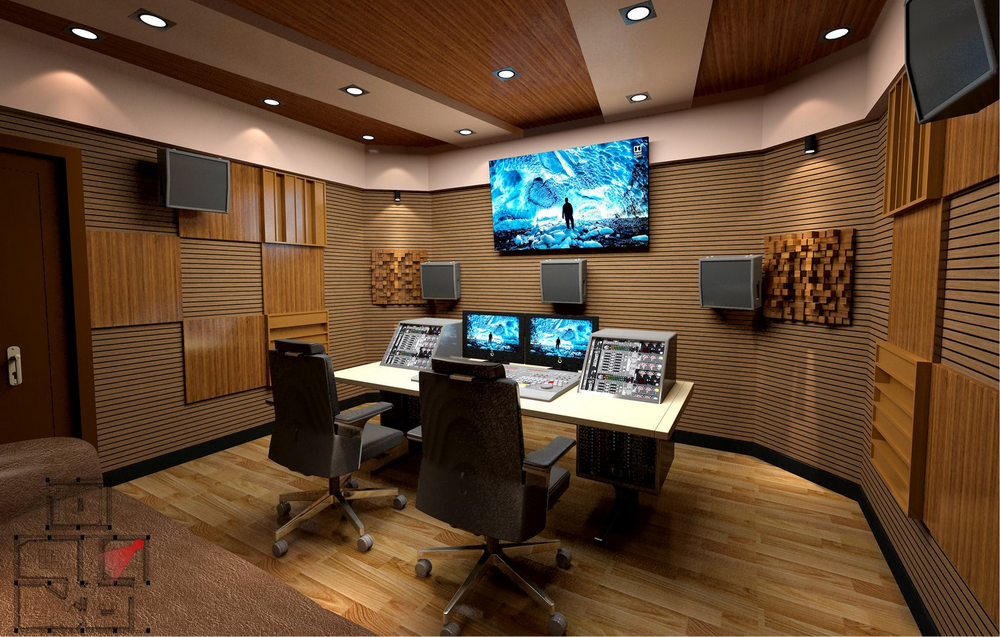
A successful esports stage design begins with an operational brief, not an equipment quotation.
Before developing concepts, establish:
- Game titles, competition formats, and simultaneous player counts.
- Audience capacity and seating configuration.
- Player, coach, referee, and production requirements.
- Broadcast destinations, camera positions, and recording needs.
- Installation time, event schedule, and changeover expectations.
- Available power, cooling, connectivity, and structural capacity.
- Budget, maintenance responsibilities, and future expansion plans.
A temporary tournament stage and a permanent esports arena may share visual elements, but their infrastructure priorities differ. Temporary installations emphasize transport, assembly, and repeatable setup. Permanent venues need maintainable systems and flexibility across years of operation.
Our recommendation is to approve the brief jointly with the owner, tournament operator, broadcast team, and engineering leads.
Esports audiences need to see both the competitors and the gameplay. A dramatic stage can still fail if spectators cannot read the game interface.
Extron's esports design guidance highlights this distinction: arena seating often prioritizes viewing screens rather than the player stage alone.
| Zone | Design priority | Coordination check |
|---|---|---|
| Competition stage | Player comfort and fair conditions | Desk spacing, monitor privacy, referee access |
| Audience area | Readable gameplay and clear circulation | Screen sightlines, accessible seating, exits |
| Commentary position | Clean speech and useful monitoring | Acoustic separation and production communication |
| Production control | Reliable monitoring and signal management | Cable routes, cooling, service access |
| Backstage area | Secure preparation and efficient movement | Team separation, equipment storage, access control |
Test sightlines from the nearest, farthest, and most off-axis seats. Include wheelchair locations and camera platforms in the model.
Also review what players can see. Audience displays, reflection paths, and backstage monitors should not accidentally expose restricted match information.
Esports stage acoustics must support two different experiences: excitement for spectators and controlled listening conditions for competitors.
Acoustic treatment and sound isolation perform different jobs. Treatment manages reflections within a room. Isolation reduces sound transmission between spaces. Wall panels alone do not make a player booth soundproof.
1. Player audio: game sound and team communication.
2. Audience audio: commentary, music, announcements, and show effects.
3. Broadcast audio: independently controlled sources for remote viewers.
Coordinate loudspeaker placement, stage orientation, microphone selection, and room treatment before finalizing scenic construction.
A useful industry example comes from Riot Games. Its March 2026 VCT Pacific update describes testing at peak commentary volume, in-ear monitors for team communications, and over-ear headsets carrying masking noise. It also emphasizes stronger rehearsal-based checks.
The lesson is operational as well as architectural: equipment must be tested under realistic match conditions. Do not compensate for poor isolation by simply increasing masking levels. Establish safe listening practices and tournament-approved procedures.
Lighting should make the event exciting without making competition uncomfortable.
A practical esports stage lighting design separates three layers:
- Player lighting: controlled illumination for faces and workstations.
- Scenic lighting: color, movement, branding, and visual depth.
- Broadcast lighting: consistent exposure and usable camera images.
Keep moving beams and distracting effects away from players during active competition. Check for reflections on monitors, glossy desks, and booth glazing.
Evaluate fixtures with the actual cameras, frame rates, shutter settings, and LED backgrounds intended for the event.
Look for flicker, banding, uneven skin tones, and excessive contrast between faces and displays. A scene that looks impressive to the eye may require adjustment on camera.
Program separate presets for walk-ins, live matches, pauses, interviews, and awards. Define who can trigger them and which effects remain disabled during play.
The best LED wall for an esports stage is not automatically the largest or the finest-pitch model.
Select displays by considering viewing distance, content detail, brightness, camera framing, processing, maintenance access, and budget.
Use actual gameplay when reviewing options. A sponsor logo may look excellent while a minimap, inventory panel, or score overlay remains unreadable.
The player's local monitor path should not depend unnecessarily on audience-screen processing or broadcast conversion.
Map separate routes for:
- Player displays.
- Observer or spectator feeds.
- Audience LED walls.
- Commentary monitors.
- Broadcast production.
- Sponsor and information displays.
Extron's systems guide emphasizes signal integrity, high-performance distribution, and support for the required resolutions and refresh rates.
For LED backgrounds appearing on camera, test for moiré and scanning artifacts. Specify the complete camera-display combination rather than relying on one advertised refresh-rate figure.
These systems are rarely the most photogenic part of an esports venue. They are among the most consequential.
Develop coordinated infrastructure drawings before stage fabrication.
Provide appropriately managed connectivity for tournament equipment. Separate competition traffic from public Wi-Fi and other venue services according to the network design.
Confirm publisher requirements, server arrangements, security policies, and available internet services. Test latency, packet loss, and stability under representative load—not just headline download speed.
Prepare an equipment-based electrical load schedule. Include gaming stations, displays, lighting, audio, production racks, and support systems.
Have qualified professionals design distribution, protection, earthing, and applicable backup arrangements. Coordinate cooling around actual equipment loads, occupied conditions, and acceptable noise levels.
Provide labeled cable routes and service access. A hidden connector is not a maintainable connector.
Stage machinery and suspended equipment require engineered solutions, not visual assumptions.
Qualified structural and rigging professionals should verify supports, load paths, suspension points, and operating limits. Coordinate local fire, electrical, accessibility, and building requirements with the relevant authorities.
For lifting platforms or moving scenery, establish operating procedures, exclusion zones, emergency functions, and inspection responsibilities.
Keep escape routes clear of flight cases and temporary cabling. Protect cables where people cross them.
An EPC delivery model can help coordinate these interfaces, but it does not replace local approvals or specialist engineering.
An esports stage serves two audiences: people in the venue and people watching remotely.
Plan camera positions while developing the stage—not after scenic elements are installed.
Typical coverage may include:
- A wide stage shot.
- Player reaction cameras.
- Host and interview positions.
- Commentary cameras.
- Audience reaction shots.
- Observer-generated gameplay.
Check whether screens dominate exposure, lighting fixtures enter frame, or structural elements obstruct faces.
XR virtual-extension technology can support introductions, analysis, sponsor presentations, and studio-style segments.
However, camera tracking, synchronization, rendering, lighting, and rehearsal requirements must be budgeted together. XR should strengthen a defined production workflow, not become an expensive feature without a clear use.
One important information gap in equipment-led stage articles is acceptance testing. A checklist of products cannot prove that the whole system works.
Agree measurable acceptance criteria before procurement.
| Test area | Practical verification | Evidence to retain |
|---|---|---|
| Sightlines | Review gameplay from representative seats | Marked seating plan and photographs |
| Player audio | Test commentary leakage under approved conditions | Audio test record and operator sign-off |
| Video paths | Verify specified formats and measured delay | Signal-path test results |
| Broadcast | Rehearse a complete programme sequence | Test recording and issue log |
| Infrastructure | Run representative equipment loads | Electrical, network, and thermal records |
| Recovery | Simulate approved failure scenarios | Recovery procedure and rehearsal results |
Set numerical limits according to the game, venue, equipment, and event requirements. Avoid copying universal targets from unrelated projects.
Handover should include as-built drawings, equipment schedules, configuration backups, training records, maintenance instructions, and unresolved-item tracking.
SJAVL's published esports project summary describes a commercial complex with approximately 1,200 square meters, 40 gaming stations, 120 audience seats, and a main stage incorporating lifting mechanisms.
The summary identifies coordinated acoustics, lighting, audio, and stage machinery. It also states that the project followed Class B venue requirements under GB/T 44456—2024.
These are company-published project details, not independently audited performance results. Nevertheless, the example illustrates an important planning relationship: venue size, station count, audience capacity, acoustic zones, and machinery must be resolved together.
For another venue, the correct solution may be different. Do not treat those dimensions or capacities as a standard template.
Compare proposals by scope and operational value, not equipment totals alone.
Include design, approvals, acoustic construction, infrastructure, installation, programming, testing, training, spares, and continuing support.
Ask practical questions:
- Can technicians replace components without dismantling scenery?
- Are configuration files and licenses included?
- Who supports the venue after handover?
- Which equipment is locally serviceable?
- How easily can the stage accommodate another game format?
For cross-border esports venue projects, clarify import responsibilities, documentation languages, local contractor interfaces, remote support, and on-site attendance before contracting.
A dependable esports stage combines competitive fairness, readable gameplay, broadcast-ready presentation, and maintainable engineering.
Guangzhou Saijia Acoustic & Lighting Engineering Co., Ltd. provides integrated venue services across acoustics, lighting, audio, LED displays, stage machinery, AV control, and XR systems.
Send SJAVL your venue drawings, location, game formats, audience target, broadcast requirements, opening schedule, and budget range. Request an integrated concept and scope review before committing to separate equipment packages.
There is no universal stage size. Determine it from player numbers, desk dimensions, referee positions, camera requirements, accessible circulation, and safe equipment access. Validate the layout before procurement.
Start with competitive conditions and operational reliability. Clear sightlines, controlled audio, suitable lighting, stable connectivity, and safe infrastructure support the visual presentation—not the reverse.
Not always. Requirements depend on tournament rules, game format, venue acoustics, and commentary leakage. Evaluate the complete isolation and monitoring arrangement with the tournament operator.
Review actual gameplay from representative audience positions. Evaluate interface readability, viewing angles, brightness, camera compatibility, processing, and service access rather than selecting by screen size alone.
Potentially, following a feasibility assessment. Review screen sightlines, connectivity, power, cooling, acoustic conditions, rigging capacity, accessibility, and production space before assuming the existing infrastructure is sufficient.
It should define design responsibilities, procurement, construction interfaces, installation, programming, commissioning, acceptance tests, training, documentation, exclusions, warranties, and support arrangements.
1. Guangzhou Saijia Acoustic & Lighting Engineering Co., Ltd. "Company Profile, Systems & Expertise, and Featured Projects." Source for the company's stated experience, service scope, delivery process, and published esports project summary. These are first-party company claims. [acousticscn]
2. Extron Electronics. *Esports Systems Design Guide*, Revision A, November 2020. Source for esports AV architecture, screen-oriented audience planning, signal distribution, production spaces, and systems coordination. Historical market forecasts and example PC specifications were not used as current recommendations. [media.extron]
3. VALORANT Esports Staff. "Changes Coming to VCT Pacific," March 25, 2026. Source for the tournament example concerning commentary leakage, layered player audio, headset procedures, and rehearsal-based audio testing. [valorantesports]
4. Chapman Taylor. "Designing E-Gaming Arenas: Creating Immersive Esports Environments," August 14, 2023. Supporting architectural context for sightlines, player ergonomics, flexible layouts, and broadcast infrastructure. [chapmantaylor]