
Views: 260 Author: SJAVL Publish Time: 2026-11-11 Origin: Site


Content Menu
● How to Compare Acoustic Engineering Proposals from Different Contractors Fairly
● 1. Compare Acoustic Outcomes Before Products
>> Separate Room Acoustics, Sound Isolation, and Equipment Noise
>> Specify the Measurement Method and Conditions
● 2. Normalize the Scope Before Comparing Prices
>> Distinguish Consultancy from Turnkey Delivery
● 3. Evaluate Engineering Evidence, Not Presentation Quality
>> Check Material Evidence and Installation Details
● 4. Compare Contractors Through Relevant, Verifiable Experience
>> Turn Customer Reviews into Verification Questions
● 5. Calculate the Evaluated Cost, Not Just the Quoted Price
>> Illustrative Comparison: Why the Lowest Bid May Change
● 6. Use a Weighted Acoustic Contractor Evaluation Scorecard
● 7. Make Commissioning and Acceptance Contractual
>> Separate Room Testing from System Commissioning
● 8. Clarify Integration Risks Before Signing
● Request an Evidence-Based Proposal from SJAVL
>> What should an acoustic engineering proposal include?
>> How can I compare proposals with different acoustic materials?
>> Is the cheapest acoustic contractor necessarily a poor choice?
>> What is the difference between acoustic treatment and soundproofing?
>> Should I require independent acoustic testing?
>> Can an EPC contractor replace an independent acoustic consultant?
At Guangzhou Saijia Acoustic & Lighting Engineering Co., Ltd. (SJAVL), we approach one procurement question from the venue owner's perspective: how to compare acoustic engineering proposals from different contractors when each quotation includes different materials, technical promises, and exclusions.
Our company background describes 26 years of experience spanning design, construction, supply, installation, commissioning, testing, and long-term support. That integrated perspective shapes this guide: compare the finished venue and the contractor's responsibilities—not simply the equipment list.
A strong proposal should explain what your space must achieve, how the contractor will deliver it, and how performance will be verified. The following framework helps owners turn competing quotations into an evidence-based purchasing decision.

Before comparing prices, give every bidder the same project brief.
A theater, recording studio, conference hall, and multipurpose venue do not share identical acoustic priorities. Even two auditoriums may need different solutions because their volumes, programs, neighboring spaces, and operating schedules differ.
Prepare a common brief covering:
- Venue dimensions, drawings, and existing conditions.
- Primary activities: speech, amplified music, recording, or mixed use.
- Audience capacity and seating configurations.
- Adjacent noise-sensitive spaces.
- HVAC and other building-services operating conditions.
- Budget, opening date, and construction restrictions.
- Required deliverables, testing, training, and maintenance.
Acoustic design criteria should reflect the building's functions, applicable standards, and operator requirements. Establishing these before tendering gives contractors a common basis for design and pricing. [geonoise]
A proposal listing acoustic panels, loudspeakers, and insulation is not yet a complete performance proposal.
Ask the contractor to connect each proposed solution to a defined requirement.
These are different engineering problems:
- Room acoustics concerns how sound behaves inside a space.
- Sound isolation concerns sound transmission between spaces.
- Building-services noise concerns sources such as ventilation and mechanical equipment.
An acoustic scope should address the relevant categories separately. Professional design workflows commonly establish room-acoustic criteria, partition requirements, and mechanical-noise criteria as distinct tasks. [geonoise]
For buyers, the practical implication is simple: an attractive absorption treatment should not be accepted as evidence that noise transfer to neighboring rooms has been solved.
Request a performance schedule rather than vague promises such as "excellent acoustics."
| Performance area | What the proposal should specify | Comparison question |
|---|---|---|
| Reverberation | Target by relevant frequency bands, room condition, and measurement method | Are all bidders designing for the same condition? |
| Speech intelligibility | Agreed STI criterion, coverage locations, and operating conditions | Will performance be checked across the audience area? |
| Sound isolation | Required rating, test method, and separating construction | Is the commitment based on installed construction? |
| Background noise | Agreed criterion and equipment operating state | Will HVAC operate during acceptance testing? |
| Sound-system performance | Coverage, operating modes, and verification procedure | Are predictions and final measurements both included? |
ISO 3382 addresses room-acoustic measurement, with the appropriate part selected for the space. IEC 60268-16 defines the Speech Transmission Index model and associated measurement and prediction methods. These standards support measurement; they do not replace a project-specific performance brief.
Avoid accepting one universal reverberation-time target for every venue.
The lowest quotation may simply contain the least work.
Ask each contractor to complete the same scope matrix, marking every item as included, excluded, optional, or provisional.
| Work package | Evidence to request |
|---|---|
| Existing-condition assessment | Survey scope and measurement locations |
| Acoustic design | Calculations, modeling assumptions, and drawings |
| Sound isolation | Wall, door, ceiling, and penetration details |
| Building-services coordination | HVAC noise and vibration-control responsibilities |
| Materials and installation | Quantities, specifications, and installation methods |
| AV integration | System interfaces and coordination drawings |
| Commissioning | Test procedures, reports, and correction obligations |
| Handover | As-built documents, training, warranties, and support |
Acoustic consultancy scopes commonly extend beyond design recommendations to drawing reviews, construction coordination, and final assessment against agreed criteria. Check which of those stages each bidder has actually priced.
A design-only proposal and an EPC proposal are not equivalent.
An EPC package may combine engineering, procurement, construction, and commissioning. However, the label alone does not establish responsibility for every interface.
For projects combining acoustics, lighting, stage machinery, LED displays, intelligent control, and AV systems, request a responsibility schedule identifying who designs, supplies, installs, coordinates, and verifies each element.
SJAVL's service scope can be presented within this integrated framework. Owners should nevertheless evaluate the written project commitments rather than assume that every advertised capability is included.
A polished proposal can make an incomplete design look convincing.
Use technical clarification meetings to examine the assumptions behind the drawings and simulations.
Ask:
1. Which existing conditions were measured?
2. Which inputs were assumed?
3. What occupancy and seating conditions were modeled?
4. How were material properties selected?
5. Which design risks remain unresolved?
6. What changes would trigger recalculation or additional fees?
A credible design process connects surveys, acoustic criteria, architectural coordination, construction documentation, and final measurements. Ask bidders to show that chain of reasoning. [geonoise]
Request reports relevant to the exact proposed product or assembly.
Confirm:
- Product identity and thickness.
- Mounting arrangement and backing construction.
- Test method and laboratory details.
- Applicable fire documentation.
- Durability, cleaning, and replacement requirements.
- Substitution approval procedures.
For sound isolation, ask how the contractor will address doors, joints, service penetrations, and connections between assemblies. Do not let a product datasheet substitute for a coordinated construction detail.
*[Suggested visual: An annotated wall-and-door junction showing seals, service penetrations, and responsibility boundaries.]*
A project gallery is useful, but it should lead to deeper questions.
Choose reference projects with comparable room functions, construction constraints, and delivery responsibilities—not merely impressive photographs.
Ask the bidder to provide, where disclosure is permitted:
- Its precise role on the project.
- The original acoustic brief.
- Relevant completion or acceptance documentation.
- An explanation of major design constraints.
- A client contact authorized to discuss the work.
Reviews become more useful when translated into specific procurement checks.
| Review theme | Follow-up question |
|---|---|
| "Clear communication" | Who manages technical queries, and how are decisions recorded? |
| "Good sound quality" | Which measured criteria were achieved? |
| "Reliable installation" | What inspection and defect-resolution procedures were used? |
| "Helpful after-sales service" | What response time and support scope were contracted? |
This approach avoids treating general praise as technical proof.
For SJAVL or any competing contractor, request current documentation for claimed qualifications. Check the legal entity, issuing organization, validity period, and relevance to the proposed work. Marketing descriptions should not replace documentary verification.
Create a consistent commercial comparison:
Evaluated cost = quoted price + necessary exclusions + normalized allowances + owner-retained costs.
Keep estimated risk exposure visible in a separate column rather than disguising it as a certain expense.
Potential comparison items include:
- Freight, duties, taxes, and insurance.
- Access equipment and temporary works.
- Electrical and network infrastructure.
- Builder's work and structural support.
- Testing, retesting, and independent verification.
- Travel, accommodation, and overseas site attendance.
- Software licenses, spare parts, and maintenance.
Suppose Contractor A quotes $180,000 but excludes $25,000 of necessary work. Contractor B quotes $198,000 with that work included.
After normalizing those items, A's evaluated cost becomes $205,000.
This is a hypothetical example, not an SJAVL project result. It illustrates why exclusions must be priced before selecting a preferred bidder.
Any remaining uncertainty—such as an unconfirmed import charge—should remain clearly identified rather than presented as a precise final cost.
Price should influence the decision without concealing technical weaknesses.
The following is a suggested owner-side framework, not an industry-mandated scoring standard:
| Evaluation category | Suggested weight |
|---|---|
| Performance criteria and engineering approach | 25% |
| Scope completeness and interface responsibility | 20% |
| Relevant experience and delivery team | 15% |
| Commissioning and acceptance commitments | 15% |
| Evaluated commercial cost | 15% |
| Warranty, training, and ongoing support | 10% |
Score each category from 0 to 5, using written evidence.
Define the scoring rules before opening final commercial offers. For example, a high commissioning score should require a documented test plan, acceptance criteria, and a clear correction process.
Treat mandatory requirements separately. A high total score should not compensate for a failure to meet a legal, safety, or essential functional requirement.
A proposal is only as strong as its verification plan.
Before appointment, agree on:
- Test methods and applicable standards.
- Measurement locations and operating conditions.
- Instrumentation and reporting requirements.
- Witnessing arrangements.
- Acceptance criteria.
- Corrective-work and retesting responsibilities.
- Handover documents and operator training.
Acoustic verification can include sound-insulation testing, building-services noise measurements, and reverberation-time measurements. Define the tests relevant to your project rather than ordering an unspecified "acoustic test."
Room-acoustic measurements and audio-system tuning are related but different activities.
A complete workflow may include checking room performance, adjusting loudspeaker aiming and processing, and verifying system operation. Ensure the proposal assigns responsibility for both.
For cross-border projects, also agree on local witnessing, report language, travel costs, remote-support access, and the distinction between remote troubleshooting and on-site remedial work.
For venues combining acoustic construction with lighting, LED walls, stage machinery, control systems, or XR production, issue a shared interface register.
Use it to ask:
- Who coordinates equipment openings through acoustic construction?
- Who approves changes affecting room geometry or finishes?
- Who owns structural-support coordination?
- Who checks operating-noise requirements for installed equipment?
- Who maintains access for inspection and replacement?
- Who updates drawings after substitutions?
Present these as project-specific design questions, not assumptions that every venue has the same risks.
An integrated contractor should explain how disciplines coordinate and how changes are approved. The owner should retain visibility through documented decisions and updated drawings.
Guangzhou Saijia Acoustic & Lighting Engineering Co., Ltd. invites venue owners and operators to share their drawings, operating requirements, site location, procurement scope, and target opening date.
Request a proposal organized around measurable acoustic objectives, clearly allocated responsibilities, transparent exclusions, commissioning, and long-term support.
Use the same framework to assess every bidder—including SJAVL. The strongest proposal is the one that makes performance, cost, and accountability easiest to verify.
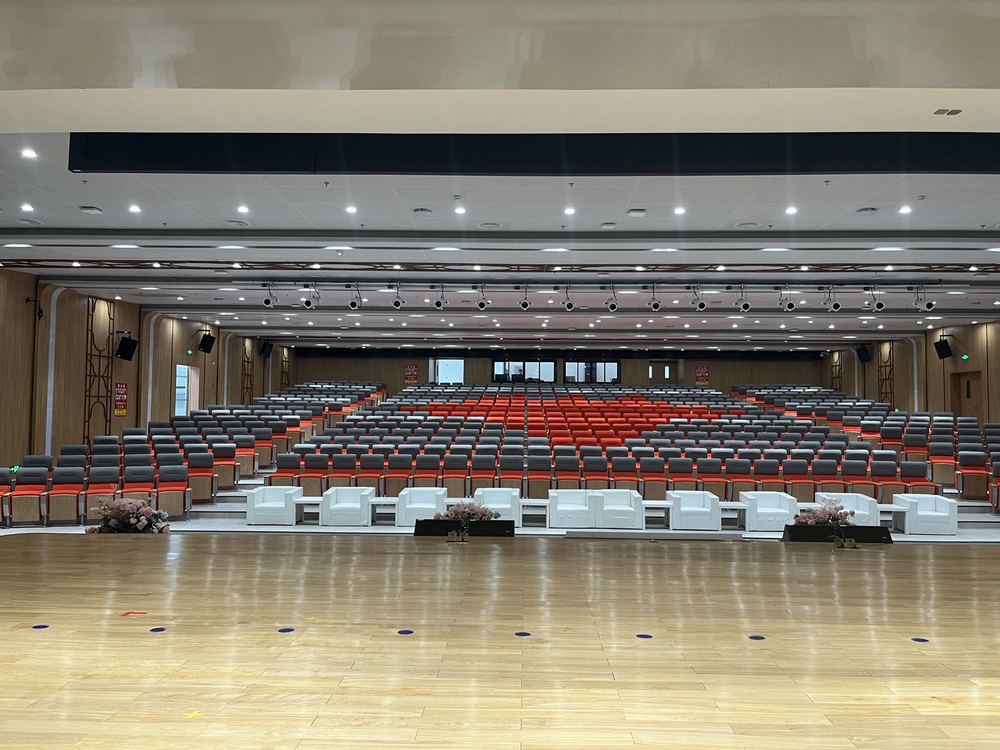
Request a project brief, performance criteria, design methodology, scope matrix, specifications, coordination responsibilities, schedule, commercial exclusions, testing plan, and support terms. Use these as comparison requirements rather than assuming every quotation includes them.
Ask each contractor to demonstrate how its proposed materials and installation details satisfy the same project criteria. Compare relevant test evidence, quantities, construction details, durability, and maintenance—not product names alone.
No. A lower price may reflect efficiency or a different technical solution. First normalize scope, assumptions, exclusions, and acceptance obligations. Then assess whether the contractor can substantiate the proposed outcome.
Acoustic treatment addresses sound behavior within a room. Sound isolation addresses transmission between spaces. Professional acoustic scopes treat room performance and separating-construction requirements as distinct design tasks.
Make that decision according to project risk, contractual requirements, and available expertise. If independent verification is required, define who appoints and pays the tester, which criteria apply, and how disputed or failed results will be resolved.
An EPC contractor may include acoustic design and verification within its scope. Whether separate owner-side review is appropriate depends on procurement arrangements and project risk. Specify responsibilities explicitly rather than relying on the EPC label.
Hot Tags: China, Global, OEM, private label, manufacturers, factory, suppliers, manufacturing company